Services Tower Inspections
Cell Tower
SAFER INSPECTIONS. BETTER DATA.
Inspect critical infrastructure without climbing a tower.
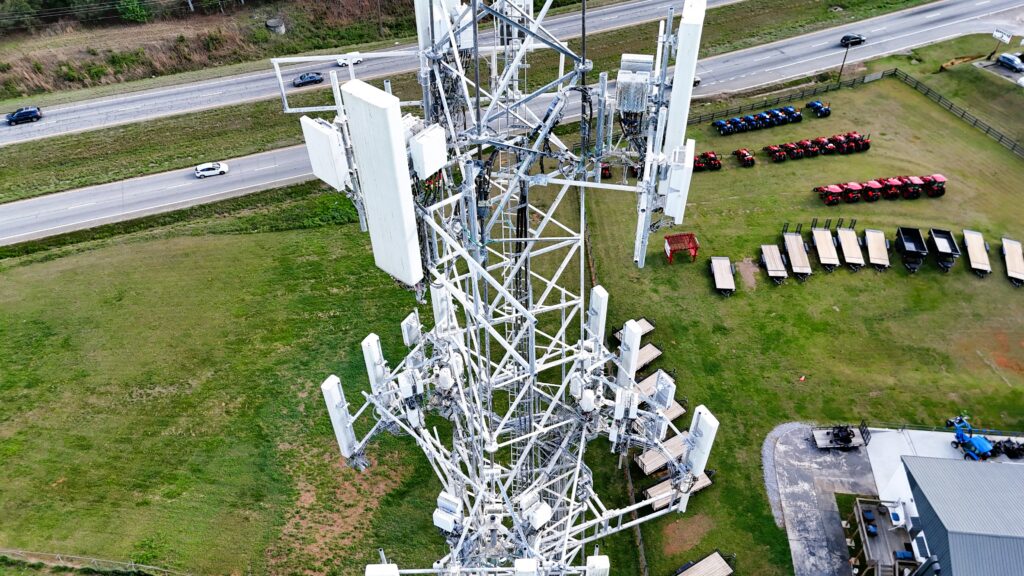
West Georgia Drone Services provides professional drone-based cell tower inspections, helping tower owners, wireless providers, contractors, and infrastructure managers identify issues quickly, safely, and efficiently.
Using high-resolution imagery and advanced aerial technology, we can inspect structures from top to bottom while reducing risk, downtime, and inspection costs.
Benefits:
✅ Improve Safety
✅ Reduce Inspection Time
✅ Minimize Downtime
✅ Lower Inspection Costs
✅ Document Conditions Accurately
F.A.Q.
Drones provide a safer, faster, and more cost-effective alternative to traditional tower climbs. High-resolution aerial imagery allows inspectors to assess antennas, mounting hardware, cables, and tower structures without exposing personnel to unnecessary risks.
Drone inspections can identify damaged antennas, loose hardware, corrosion, structural defects, missing components, cable wear, vegetation encroachment, and other maintenance concerns that may affect tower performance or safety.
In many cases, no. Drone inspections can often be completed while the tower remains operational, minimizing service disruptions and reducing downtime compared to traditional inspection methods.
Clients typically receive high-resolution photos, detailed inspection reports, annotated images, video footage, and documentation highlighting any areas of concern. Deliverables can be customized to meet maintenance, engineering, or compliance requirements.
Inspection frequency depends on tower age, location, weather exposure, and regulatory or company requirements. Many operators schedule annual inspections, while critical infrastructure may require more frequent assessments.
Yes. Thermal imaging can help identify overheating equipment, electrical anomalies, and potential issues within communication equipment that may not be visible through standard visual inspections. Combining thermal and visual data provides a more comprehensive assessment of tower conditions.